When a tooth is badly infected or damaged, there are usually two choices: save it with root canal treatment, or remove it. Saving the natural tooth is often preferred when enough healthy tooth is left. Removal makes sense when the tooth is cracked deep, too broken down, or can't be restored. The dentist should explain both before you decide.
What each option does
Root canal treatment removes the infected tissue inside the tooth, cleans and seals the roots, and keeps the tooth in place. Most back teeth need a crown afterward.
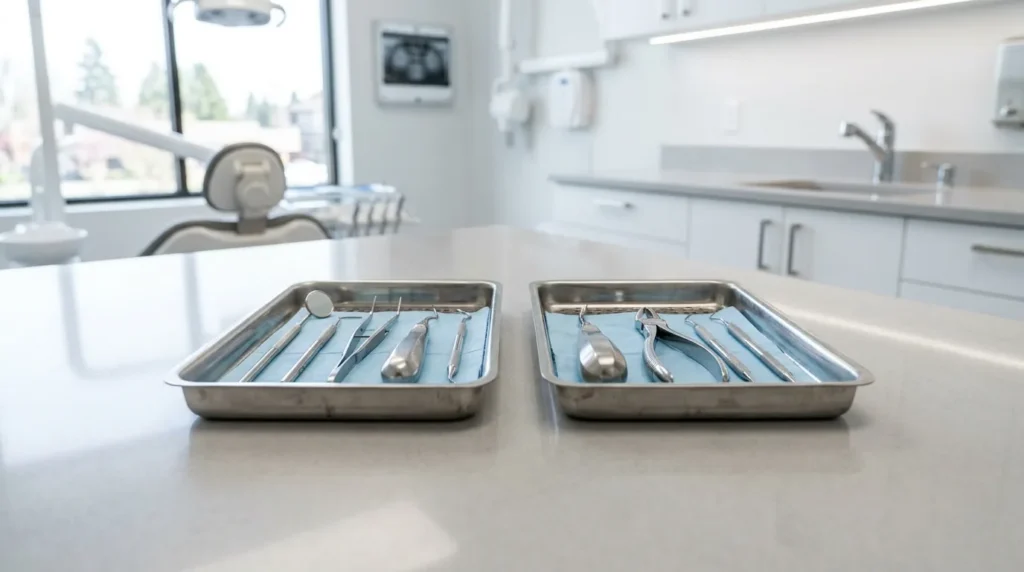
Extraction removes the whole tooth, which removes the infection with it. The gap can be left, or filled later with a bridge, partial denture or other option.
Questions that guide the choice
- Is there enough tooth left to rebuild? A tooth with little structure above the gum may not hold a crown.
- Is the root cracked? A crack that runs down the root usually means removal.
- How is the bone and gum around it? Severe bone loss can make saving it unlikely.
- Where is the tooth? Front teeth and key chewing teeth are often worth saving.
- What are your priorities? Cost now, cost later, time and how you feel about losing a tooth all matter.
Comparing them
| Root canal | Extraction | |
|---|---|---|
| Keeps your tooth | Yes | No |
| Usual next step | Crown | Space may need filling later |
| Visits | Often one or two, plus a crown | Usually one |
| Long-term | Tooth can last many years | Nearby teeth can shift if the gap stays |
What it's like
Both are done with numbing. Most people describe root canal treatment as similar to a long filling. After an extraction, soreness for a few days is normal, and you'll need to protect the blood clot.
If you're in pain right now
- Use an over-the-counter pain reliever as the label directs.
- Hold a cold pack on your cheek for swelling.
- Call a dentist today if there's swelling or a fever.
Go to an emergency room if swelling spreads toward your eye or neck, or breathing or swallowing gets hard. Mayo Clinic describes how an infected tooth is usually treated.
Questions to ask the dentist
- Can this tooth be saved, and for how long?
- What will each option cost, including the crown or replacement?
- What happens if I wait?
Our emergency root canal page explains the treatment in more detail.
More reading
Two more pages worth reading:
- American Dental Association: Root canals: what the treatment involves
- American Dental Association: Extractions: why teeth are removed and how to heal
Frequently asked questions
Is extraction cheaper?
Often at first. If you replace the tooth later, the total can be similar or higher.
Can I take antibiotics and decide later?
Antibiotics may calm a spreading infection, but the tooth still needs treatment soon.
Does a root-canal-treated tooth still feel normal?
Yes. It can feel and work like your other teeth once it's restored.
If you're in Palm Beach Gardens
Our Northlake Boulevard office is open Monday to Friday, 7:00 AM to 7:00 PM, and Saturday and Sunday, 8:00 AM to 2:00 PM. Please call ahead at (561) 867-8401 for a same-day visit. Outside those hours, an answering service picks up. For patients paying without insurance, the emergency exam and X-ray are $99.
The $99 covers the emergency exam and X-ray. Treatment is priced separately and explained before any work begins.
More on payment is on our cost and insurance page.
This article is for general education and is not a substitute for an exam by a licensed dentist.